Nobody Tells You This

An honest look at the problems every growing software company faces and why operations fail without a single source of truth.
Running a software company doesn’t break all at once.
It slowly becomes harder to understand.
At the beginning, everything is clear.
You know who’s working on what.
You know how long projects should take.
You know roughly where the money goes.
Then the company grows.
More people.
More clients.
More projects.
More tools.
And somehow, less clarity.
The Silent Chaos Phase
This is the phase nobody warns you about.
Nothing is technically “wrong.”
Projects are being delivered.
People are busy.
Revenue is coming in.
But underneath, something starts to drift:
- project estimates no longer match reality
- time tracking data feels unreliable
- planning next month becomes guesswork
- managers ask questions but don’t fully trust the answers
Chaos doesn’t look like failure.
It looks like “we’ll fix it later.”
The Real Problems Nobody Talks About
Most software companies face the same challenges — quietly.
Fragmented Team Visibility
Someone is on leave, but nobody knows until it’s too late.
Another person is overloaded, but it only shows when deadlines slip.
Team members don’t see their own progress clearly.
The information exists — just not in one place.
Estimates vs. Reality Drift
Projects are sold based on assumptions.
Reality is discovered weeks later.
Hours don’t match plans.
Budgets quietly stretch.
Profitability becomes a post-mortem, not a decision tool.
Sales Detached From Delivery
Offers are created without real project data.
Employee seniority and tech complexity are underestimated.
Past experience isn’t used properly.
Sales moves fast.
Delivery pays the price.
Decisions Without Real-Time Data
Simple questions become meetings:
- Who is on leave today?
- Which projects are at risk?
- Are we overbooked next month?
- Did we actually deliver on time?
When answers aren’t immediate, decisions get delayed — or guessed.
Why More Tools Don’t Fix This
The instinctive response is to add tools.
One for HR.
One for time tracking.
One for projects.
One for sales.
One for reporting.
But more tools don’t create clarity.
They create more fragments.
Digital transformation fails when tools grow faster than understanding.
What Actually Changes Things
Real improvement doesn’t come from adding features.
It comes from designing visibility into the business.
That means:
- one place where operational truth lives
- real-time insight instead of retrospective reports
- transparency for managers and staff
- planning that reacts before problems escalate
Good systems don’t create noise.
They remove it.
The Shift Every Growing Software Company Must Make
At some point, every software company faces a choice:
Do we keep managing complexity manually
or do we design it out?
Because scaling isn’t just about more people and projects.
It’s about seeing clearly — before things break.
And nobody tells you that early enough.
The Next Step
Companies that scale sustainably don’t work harder to keep control.
They design systems that make control effortless.
They replace guesswork with visibility.
They replace assumptions with data.
They replace fragmentation with a single source of truth.
Digital transformation starts there.
Facing the same operational challenges?
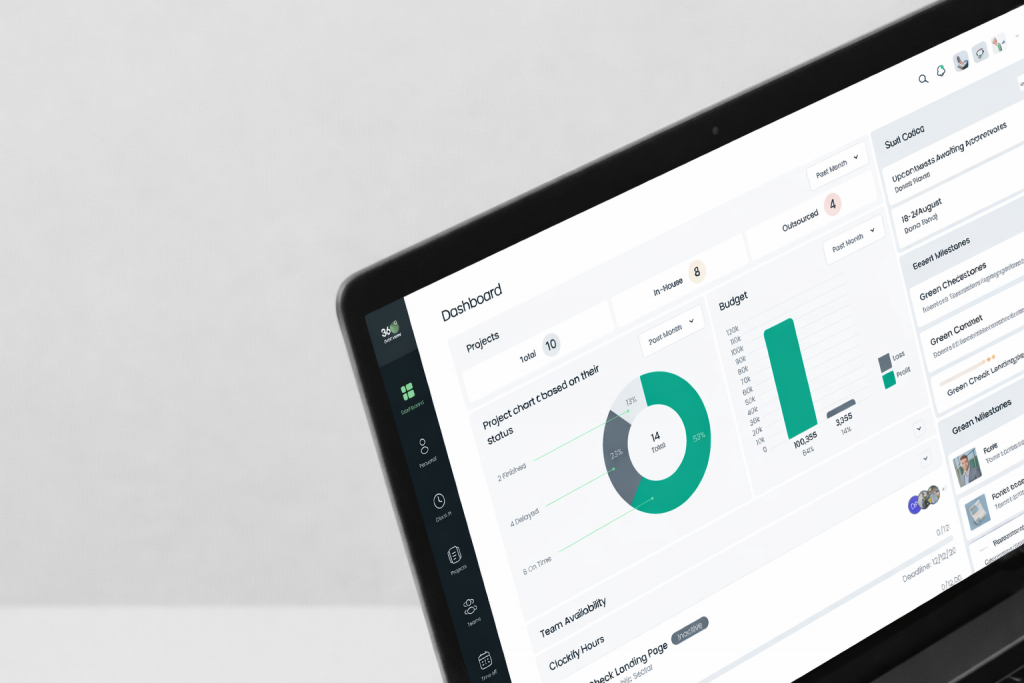
We’re building a solution for exactly this.
Reach us at [email protected].